

Trying a new art form can be an exciting way to explore your creativity, learn practical skills, and create something beautiful with your own hands. If you enjoy colourful designs and handmade crafts, Glass Fusing Classes offer an excellent opportunity to discover the artistic possibilities of glass. Beginners can learn how different pieces of glass are combined using heat to create decorative and functional artwork, even without any previous experience.
What Is Glass Fusing?
Glass fusing is an art technique in which two or more pieces of compatible glass are heated in a specialised kiln until they bond together. The glass softens under controlled temperatures, allowing artists to create colourful patterns, layered designs, and interesting textures.
Unlike traditional glassblowing, which involves shaping molten glass, glass fusing allows beginners to work with pre-cut pieces of glass. These pieces can be arranged in different combinations before being placed in a kiln for firing.
What Happens During Your First Glass Fusing Class?
Your first class introduces you to the materials, tools, and basic techniques needed to begin creating glass art. Although every studio may follow a slightly different format, most beginner sessions include the following steps.
1. Introduction to Glass Fusing
The session usually begins with an introduction to the process and the different types of glass used in the studio. Your instructor may explain how glass thickness, colour, transparency, and compatibility affect the final result.
2. Exploring Colours, Textures, and Materials
One of the most enjoyable parts of glass fusing is selecting your materials. Beginner classes typically provide a selection of coloured glass pieces, along with tools and decorative elements suitable for the chosen project.
You may find yourself drawn to bright colours, subtle shades, geometric patterns, or abstract arrangements. Some people prefer a symmetrical design, while others enjoy combining shapes in a more spontaneous way.
3. Designing Your Glass Artwork
Once you understand the materials, you will begin arranging glass pieces to create your design. Depending on the class, you might make a small coaster, pendant, decorative tile, or another beginner-friendly item.
You will learn how to layer glass, balance colours, create patterns, and leave suitable spacing where needed. Your instructor can also explain how the final appearance may change after firing.
4. Learning to Use Tools Safely
Glass fusing involves sharp edges and specialised equipment, so safety is an important part of the learning process. Your instructor will explain how to handle glass pieces carefully, use appropriate tools, and keep your workspace organised.
Depending on the activity, you may learn about glass cutters, tweezers, protective equipment, and kiln safety. Beginners should follow the studio’s instructions rather than attempting to cut glass or operate equipment without supervision.
5. Understanding the Kiln Firing Process
After your design is complete, the glass is prepared for firing in a specialised kiln. The temperature and firing schedule depend on the type of glass, the project’s thickness, and the desired finish.
During firing, the glass pieces soften and bond together. The artwork is then cooled gradually through a controlled process called annealing, which helps reduce internal stress and lowers the risk of breakage.
What Can You Create as a Beginner?
You do not need advanced artistic skills to make attractive glass artwork. Beginner projects are usually small enough to help you understand the techniques without feeling overwhelmed.
Here are a few possibilities:
- Glass coasters: Experiment with colours and patterns while creating a practical item for your home.
- Decorative pendants: Combine small glass shapes to design a colourful accessory.
- Glass tiles: Explore geometric arrangements and layered colour combinations.
- Small dishes: Learn how fused glass can be shaped into decorative objects, depending on the class and available equipment.
- Wall art and ornaments: Create a personalised piece for your room or a handmade gift for someone special.
What Should You Bring to Your First Class?
Most beginner workshops provide the glass, basic tools, and materials needed for the project. Nevertheless, check with the studio before your visit so you know exactly what is included.
For a comfortable experience, consider the following tips:
- Wear comfortable clothing suitable for a hands-on activity.
- Choose closed-toe shoes if required by the studio’s safety policy.
- Tie back long hair and follow all protective equipment instructions.
- Arrive a little early so you can settle in and understand the session plan.
- Bring design ideas or colour inspirations if you would like, but remain open to experimentation.
Why Choose FEELartistic Studio for Glass Fusing?
Choosing a creative studio with a supportive learning environment can make your first experience more enjoyable. FEELartistic Studio offers opportunities for people interested in exploring art through hands-on creative activities.
If you have been searching online for glass art classes near me, consider exploring the available glass fusing sessions at FEELartistic Studio. Review the class details, project options, age requirements, and booking information to find a session that suits your interests.
Frequently Asked Questions
1. How long does a beginner glass fusing class take?
The duration depends on the studio and the project. Many introductory workshops last a few hours, while firing and cooling may require additional time after the session.
2. Is glass fusing difficult for beginners?
Glass fusing is generally accessible to beginners when taught in a guided setting. Learning to arrange glass and select colours is straightforward, although mastering advanced techniques requires practice and experience.
3. Can I take my finished glass artwork home on the same day?
Not always. Your artwork usually needs to be fired in a kiln and cooled gradually before it is ready. Ask the studio whether collection is available on another day or whether any projects can be completed within the session.
4. Is glass fusing suitable for children?
It can be suitable for children when the studio offers age-appropriate projects and proper supervision. Because glass can have sharp edges and kilns operate at high temperatures, age restrictions and safety procedures must be followed.
5. What is the difference between glass fusing and stained glass?
Glass fusing joins compatible glass pieces together using heat in a kiln. Stained glass traditionally involves cutting coloured glass and joining the individual pieces with materials such as copper foil or lead came to create a larger design.
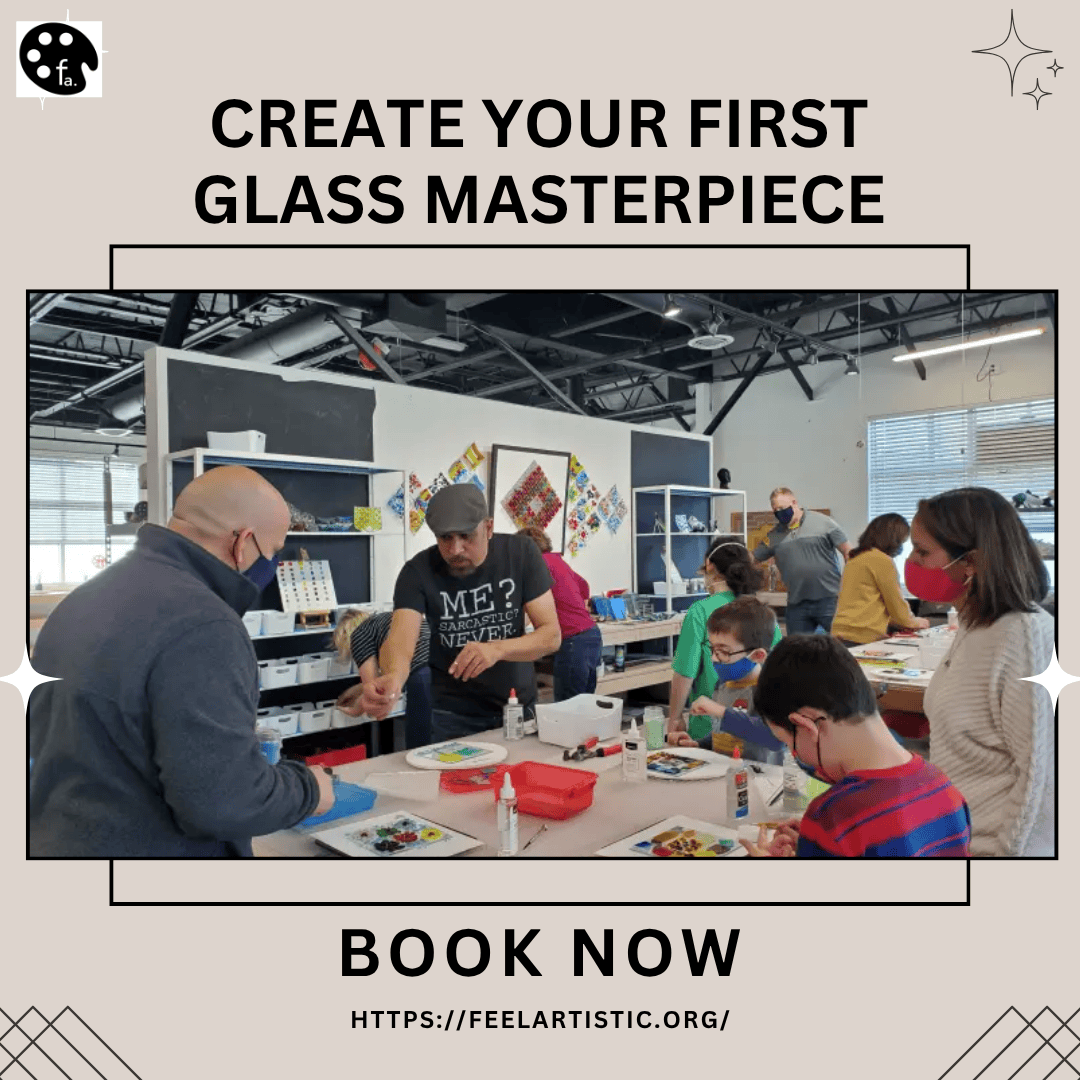
Create Your First Glass Masterpiece
Your first glass fusing class is an opportunity to explore a new creative skill, experiment with colour, and discover the satisfaction of making something by hand. From choosing your first glass pieces to learning how kiln firing transforms your design, every stage offers something new to learn.
Ready to create your own glass masterpiece? Contact FEELartistic Studio today and book your glass fusing class!